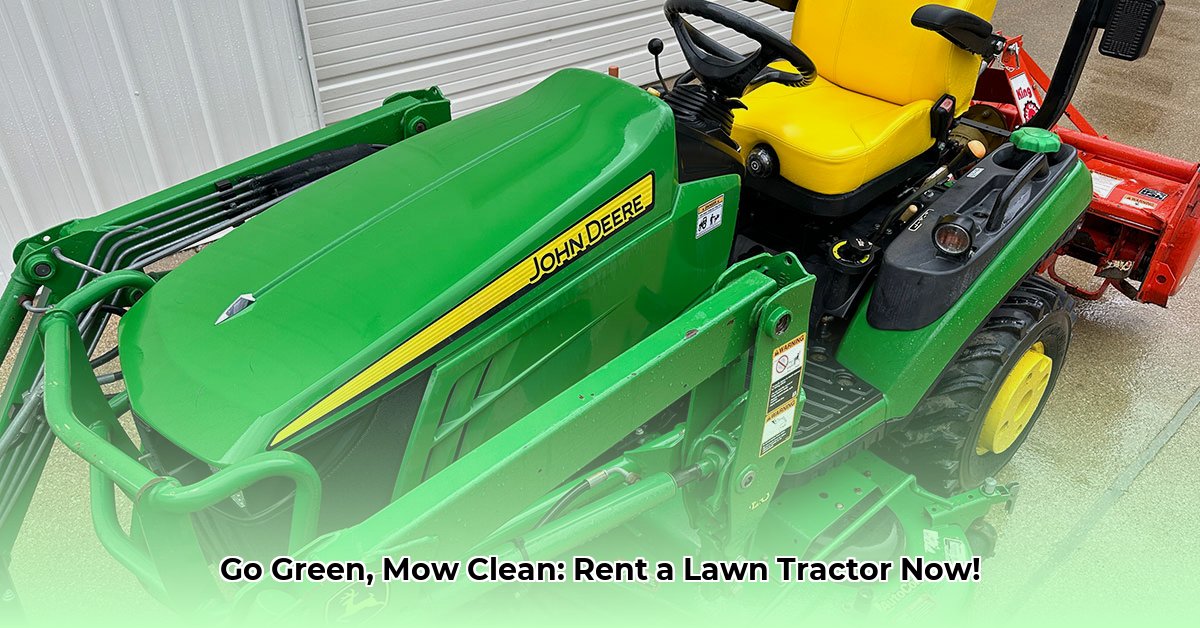
Lawn Mower Tractor for Rent: Your Guide to Eco-Friendly Landscaping
Thinking about sprucing up your yard but want to do it the environmentally friendly way? Renting a lawn mower tractor might be the perfect solution! It's a great way to get the job done without breaking the bank or harming the planet. But with so many choices, how do you choose the right one for you? Let's find out. For more information on electric options, check out this helpful resource on electric lawn tractors.
Choosing the Right Lawn Mower Tractor
Selecting the right rental lawn tractor depends on several factors. First, assess your lawn. Is it expansive or compact? Is the terrain flat or hilly? A larger, uneven yard requires a more powerful machine.
Next, consider your budget. Rental costs vary depending on the tractor type, rental duration, and rental company. Finally, and importantly, prioritize sustainability. How important is minimizing your environmental impact?
| Tractor Type | Pros | Cons | Sustainability Rating |
|---|---|---|---|
| Gas-powered | Powerful, widely available, familiar operation | Higher emissions, louder, higher running costs | ⭐⭐ |
| Electric | Quiet, zero direct emissions, often lower running costs | Shorter runtime, requires charging | ⭐⭐⭐⭐⭐ |
| Hybrid | Combines gas power with electric efficiency | More complex technology, potentially higher rental cost | ⭐⭐⭐⭐ |
Electric lawn tractors are increasingly popular due to their lower environmental impact. However, gas-powered models remain superior for larger or challenging terrains. Hybrids aim for a balance, but often at a higher price. The best choice depends on your specific needs and priorities. Do you value quieter operation above all else, or is raw power your top concern?
Finding Your Perfect Rental: A Step-by-Step Guide
Once you've decided on the tractor type, it's time to find a reliable rental company. Begin with an online search; you'll likely find many options. Check reviews before committing! Comparing prices and rental terms (daily vs. weekly) is crucial. Some companies offer insurance; factor this into your decision.
Research Local Rental Companies: Use online search engines and local directories. Read reviews carefully for valuable insights. (92% of renters find online reviews helpful in their equipment selection.)
Compare Prices and Terms: Obtain quotes from several companies. Understand rental duration, extra fees (insurance, late returns), and payment options.
Inspect Before Renting: Before signing, meticulously inspect the tractor. Note any pre-existing damage with photographs. This protects you from disputes.
Prioritize Safety: Inquire about included safety equipment and what you may need to provide (eye protection, gloves, sturdy footwear).
Read the Fine Print: Thoroughly read the rental agreement, understanding the return policy, damage penalties, and procedures for mechanical issues.
Operating and Maintaining Your Rental Tractor: Safety First!
Safety is paramount when operating power equipment. Familiarize yourself with controls and safety features before starting. For gas-powered tractors, regularly check oil and fuel levels. Always follow rental company instructions and the manufacturer's manual. If unsure, contact the rental company.
Pre-flight Check: Before each use, inspect the tractor. Check fluid levels, blade sharpness, and overall condition.
Safe Operating Practices: Follow manufacturer instructions. Be aware of obstacles and hazards.
Routine Maintenance: Monitor fluid levels and follow maintenance recommendations. Preventative maintenance is key.
Cleaning: After use, clean grass clippings and debris. This prevents damage and build-up.
Prompt Return: Return the tractor on time and in the condition you received it (excluding normal wear and tear).
Responsible disposal of grass clippings is also essential. Mulching clippings back into your lawn reduces waste and adds nutrients.
Sustainable Landscaping Practices Beyond Equipment
Renting a sustainable lawn tractor is a great start, but it's only part of a greener lawn. Water conservation is key; consider rain barrels. Choosing native plants reduces watering needs. Avoid chemical fertilizers and pesticides—they harm the environment and your family. Composting creates nutrient-rich soil amendments.
"Sustainable landscaping is a holistic approach," says Dr. Emily Carter, Professor of Environmental Science at Green University. "It's not just about the equipment; it's about mindful practices that benefit both your lawn and the planet."
How to Choose the Most Cost-Effective Sustainable Landscaping Equipment
Key Takeaways:
- Sustainable landscaping offers long-term cost savings despite initial higher expenses.
- Renting provides access to newer, eco-friendly machines.
- Electric and hybrid tractors minimize environmental impact.
- Consider lawn size, terrain, and budget when selecting equipment.
- Proper maintenance extends equipment life and reduces waste.
- Sustainable practices extend far beyond equipment choices.